Cosmetic-grade
For formulators, procurement teams, and prestige houses leaving palm.
- Standards
- BIS IS 4707 · ISO 22716 (target)
- Buyers
- Clean-beauty D2C · CMOs · Ayurveda
- MOQ (target)
- 25 kg base · 200 kg CBE
What we publish here is the technical library the company is being built on — open dossiers on six Indian butters and seven dry-fractionated stearins and oleins, with sourced specifications, formulation guidance, and honest notes on what each lipid can and cannot do. The line we intend to build is anchored by kokum stearin: a non-palm cocoa butter equivalent, roughly 55–65% stearic acid, melting near 42–46°C.
Six base lipids below, and seven engineered fractions (stearins, oleins, custom CBE blends) in the derivatives desk. Each dossier sets out published specifications, formulation guidance, and substitution notes. These are the lipids we intend to produce — none is in commercial production today.
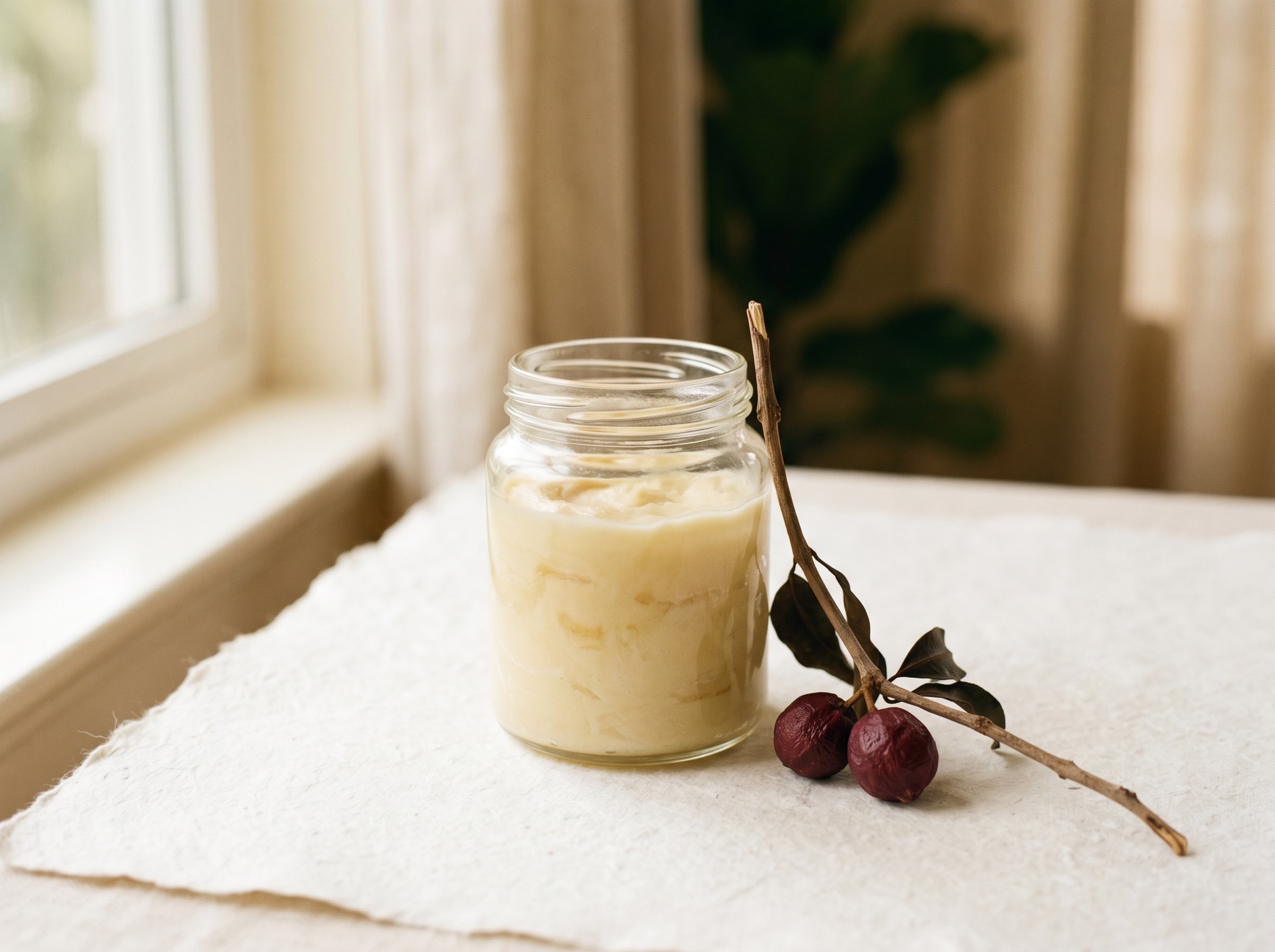 Anchor
Garcinia indica
≥70% stearic. Melts at body temperature. Comedogenicity essentially zero. The butter that makes shea feel heavy.
Read dossier →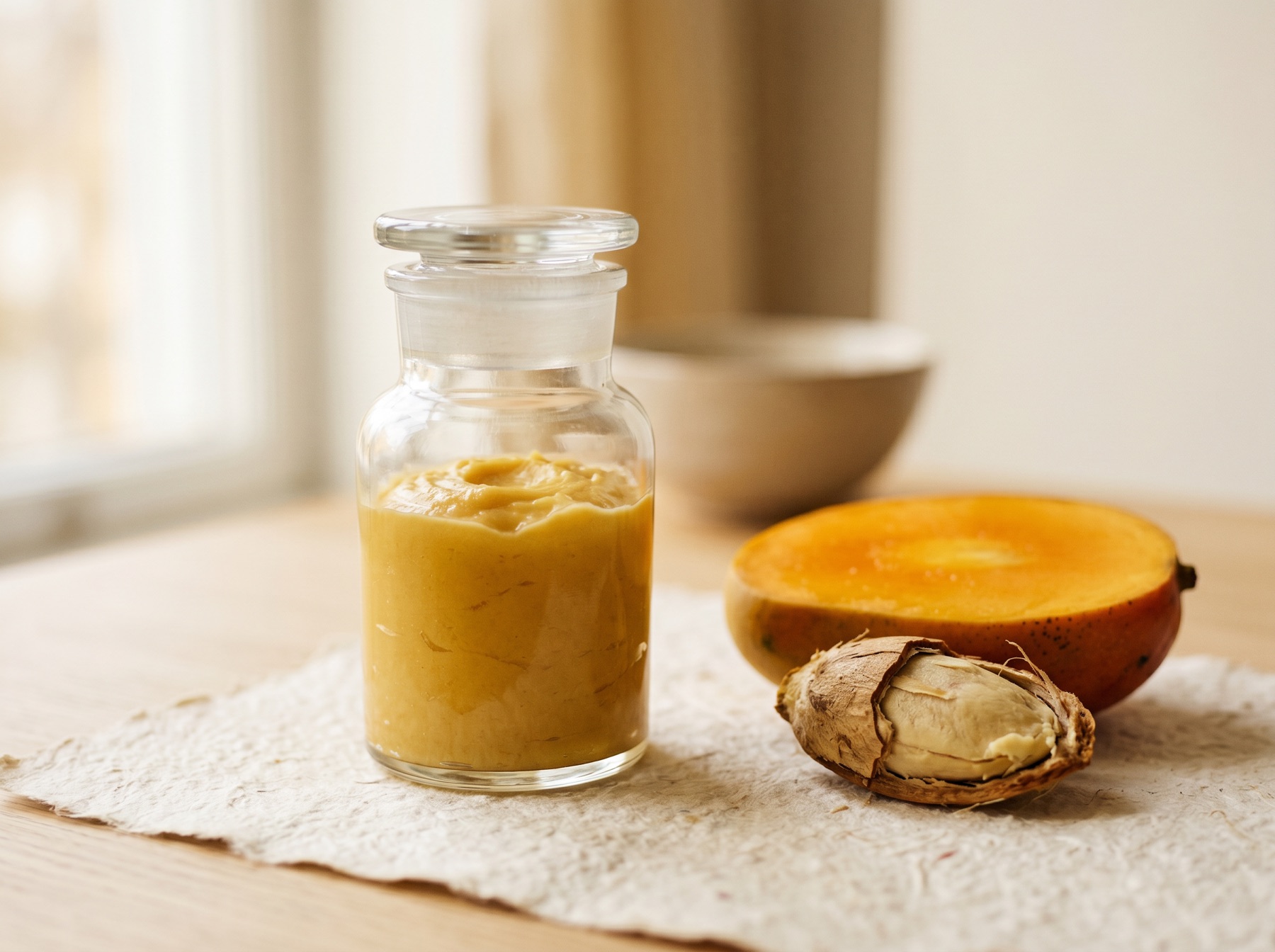 Upcycled
Mangifera indica
Balanced oleic–stearic profile. Pressed from kernels that would otherwise be burned. A waste stream, made cosmetic-grade.
Read dossier →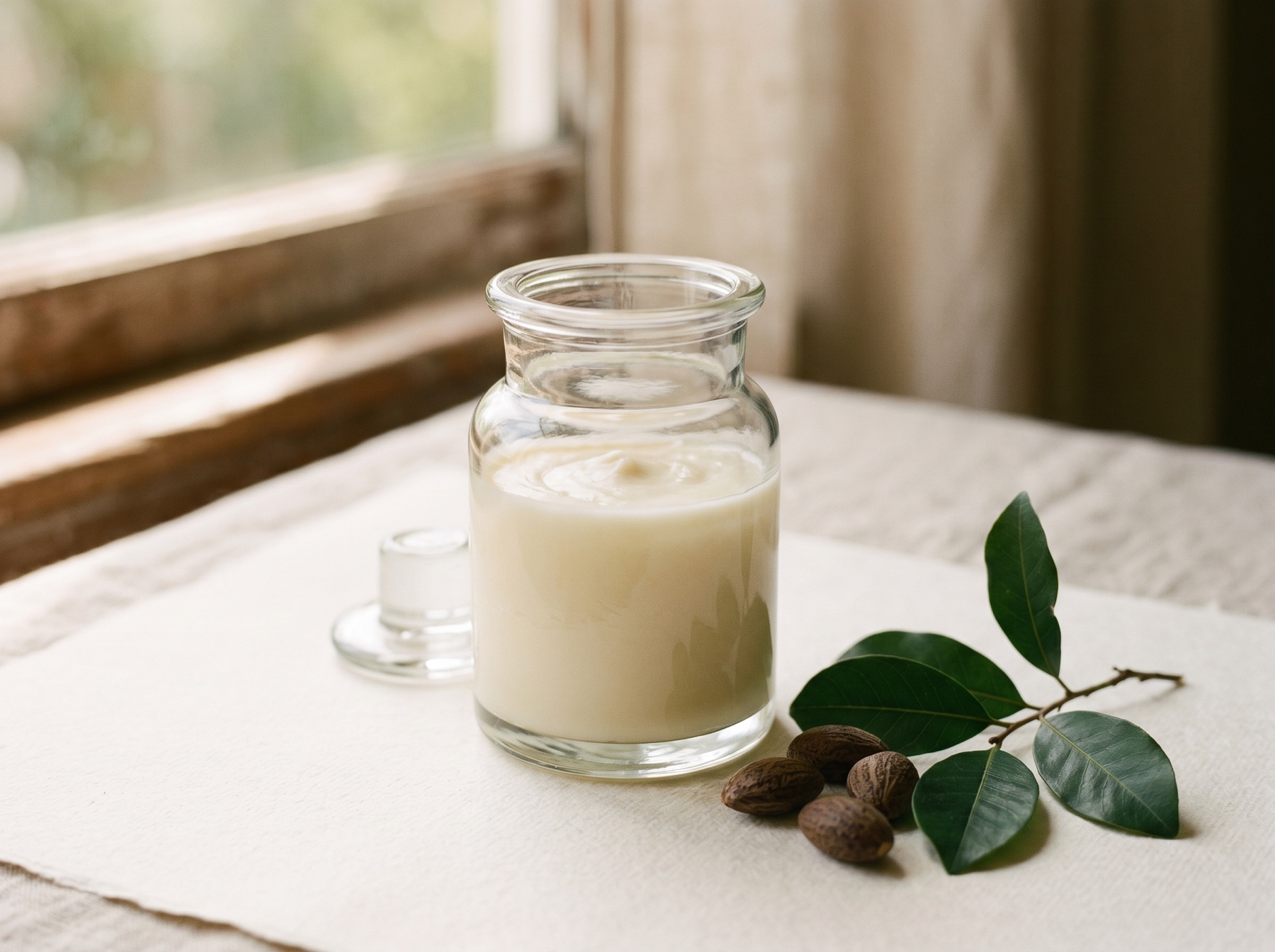 Green grade
Shorea robusta
Firm, structured, unexpectedly elegant. Refined and green grades. The backbone of our non-palm CBE.
Read dossier →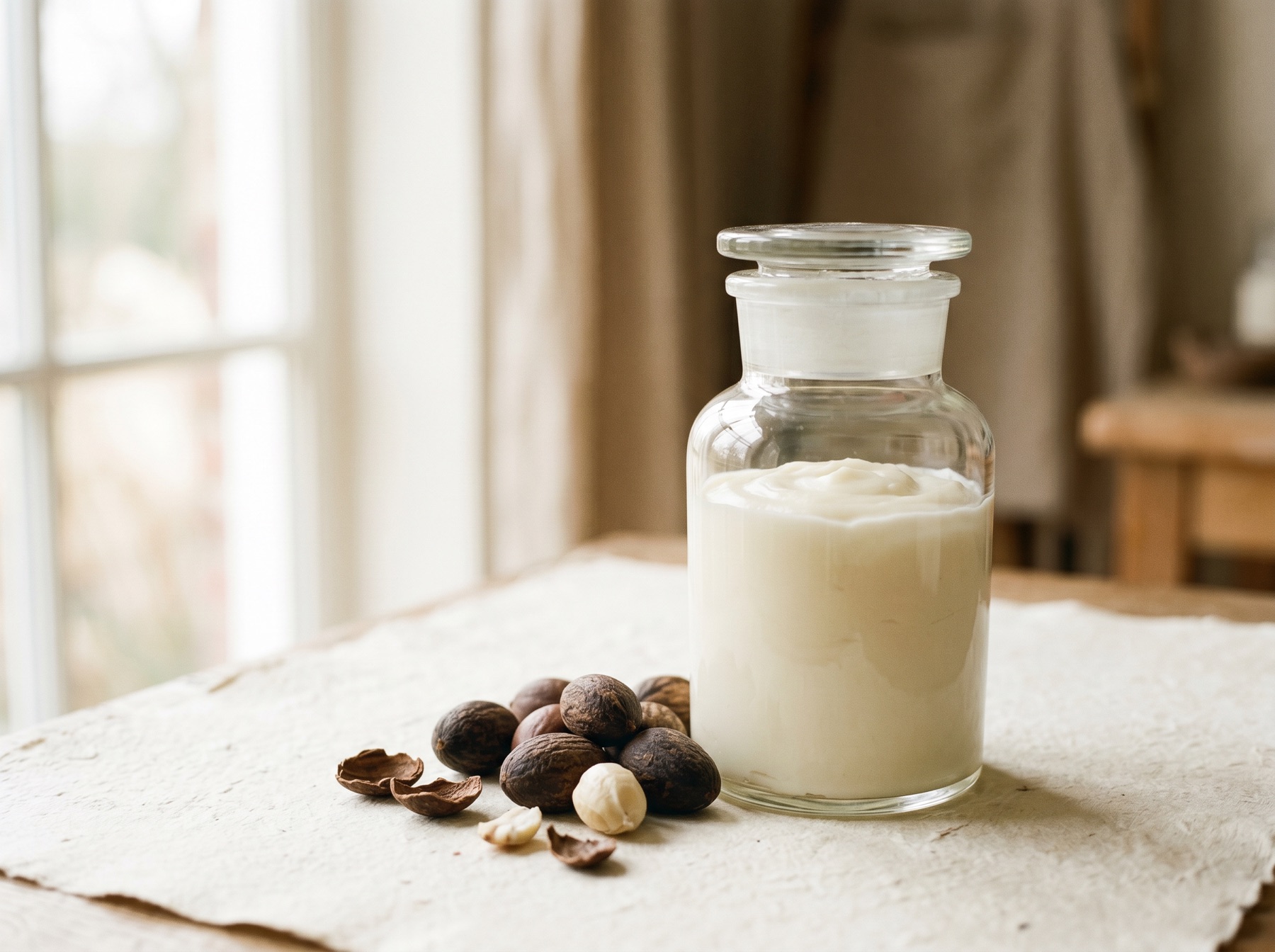 Traceable
Vitellaria paradoxa
Burkina Faso and Ghana co-operatives. Traceable West African supply chains, where the paperwork genuinely exists.
Read dossier → Non-palm
Sal-stearin based blend
For formulators leaving palm behind. Sal-stearin fractionated with kokum. Our answer to a $1.41B market.
Read dossier →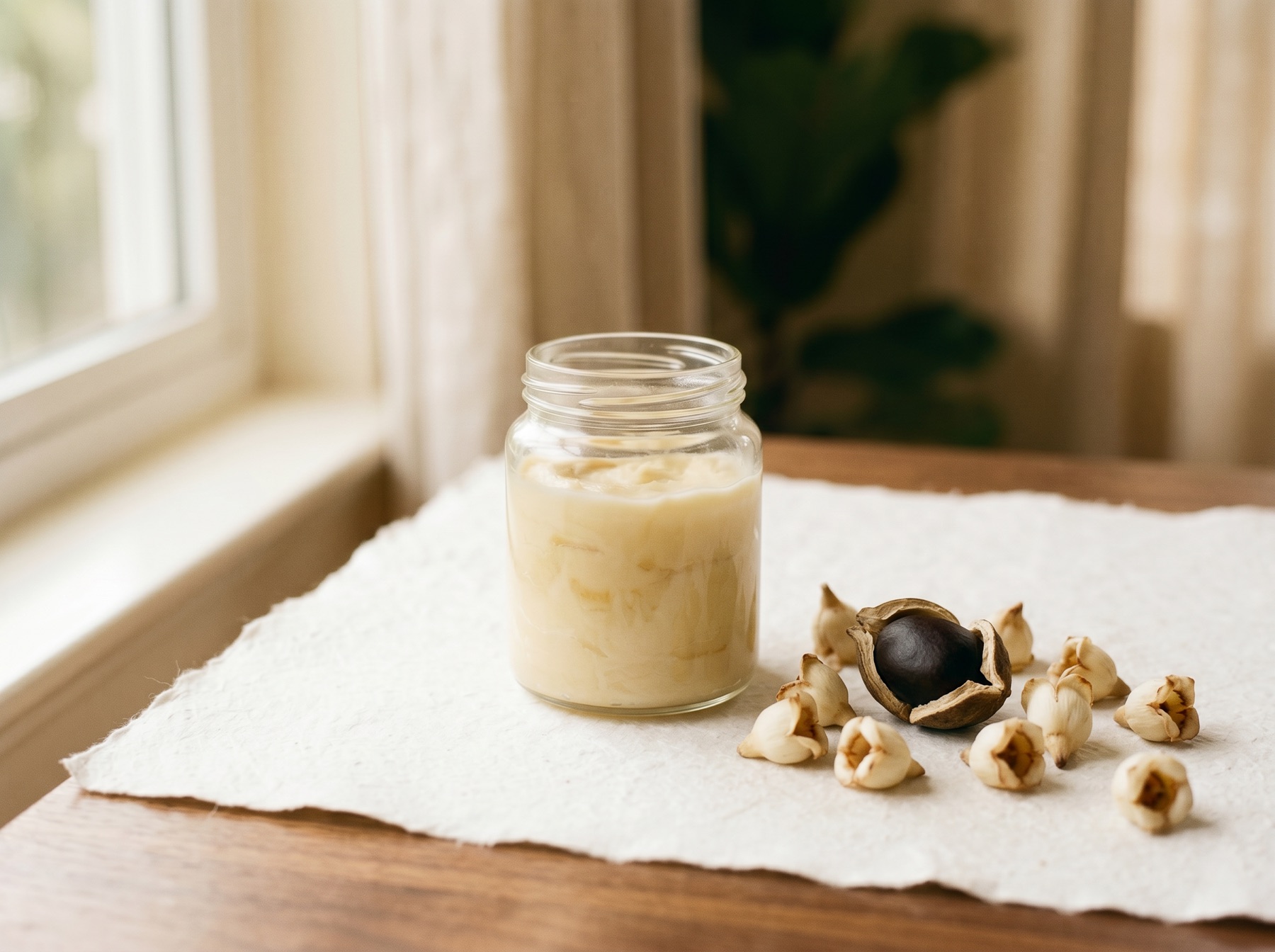 Heritage
Madhuca longifolia
The heritage lipid of the Deccan forest. Collected by tribal co-operatives under the Van Dhan scheme. A soap-maker’s workhorse, pressed soft.
Read dossier →“We believe a butter should know its own name.”
— Tejas Dudhade, Founder
The intent: every kilogram tied to a harvest week, co-operative, and press.
Fatty-acid, SAP, iodine and microbial data are planned for every lot.
No hexane, no bleaching, no palm in the CBE. A design commitment.
Kokum and mango sourcing is being built within 120 km of the Konkan belt.
The plan divides at crude oil: one track for formulators under cosmetic-grade discipline, one for chocolatiers under food-grade discipline. The figures below are target specifications.
For formulators, procurement teams, and prestige houses leaving palm.
For bean-to-bar chocolatiers and confectioners seeking a single-origin cocoa butter equivalent with zero palm.
The facility we intend to build is specified peanut-free and tree-nut-free beyond our named sources.
The intended scope is tree-borne seed and kernel fats only — kokum, mango kernel, sal, mahua, dhupa, and imported shea — with a signed allergen declaration required from every raw-material supplier at onboarding. Published now as a design commitment.

The Konkan Daily is our briefing on cosmetic lipid markets — cocoa and shea pricing, Indian D2C funding, regulation from CDSCO to EUDR, competitor moves from Manorama to AAK. It is currently paused. Leave an address and we will write when it resumes.
Read the desk →Register interest and we will write to you personally when there is validated pilot material.
The butter that makes shea feel heavy.
From Konkan with love.
Published typical values for the species, from supplier data sheets and the literature.
Kokum butter is the fat pressed from the kernel of Garcinia indica, a tree native to the Western Ghats of India. Published typical values put stearic acid around 70–75% and oleic around 15–20%, with a melt point near 37–40°C — close to skin temperature. It is among the hardest natural butters yet melts cleanly on contact, which is why formulators use it where shea would feel heavy.
Kokum is one of the classic cocoa butter equivalent feedstocks. Its value comes from a narrow, uniform triacylglycerol profile dominated by SOS (stearic–oleic–stearic), which is what gives cocoa butter its snap and melt curve. Published research on kokum as a cocoa butter extender reports SOS content around 70%, supporting partial replacement of cocoa butter in chocolate.
A cocoa butter equivalent is a fat engineered to match cocoa butter's melt and crystallisation behaviour. Most commercial CBE relies on palm mid-fraction, which carries deforestation and EUDR compliance exposure. A non-palm CBE built from Indian tree-borne fats — kokum, sal and mango kernel stearins — reaches a comparable SOS profile without palm in the supply chain.
They solve different problems. Shea is softer, higher in oleic and unsaponifiables, and gives a rich, occlusive feel. Kokum is much harder, higher in stearic, and melts more sharply with a drier afterfeel. Formulators commonly use kokum to replace part of the shea in a balm or body butter to lighten texture and add structure without palm wax.
Dry fractionation splits a butter by controlled crystallisation into two fractions with no solvent and no hydrogenation. The stearin is the hard, high-melt fraction used for structure and CBE applications. The olein is the liquid, high-oleic fraction used as a light emollient. One butter becomes two commercially distinct lipids.