Pre-production
Mango Kernel Butter — editorial still life
Dossier N° 02 · Ratnagiri & Sindhudurg, Konkan

Mango Kernel Butter

Mangifera indica

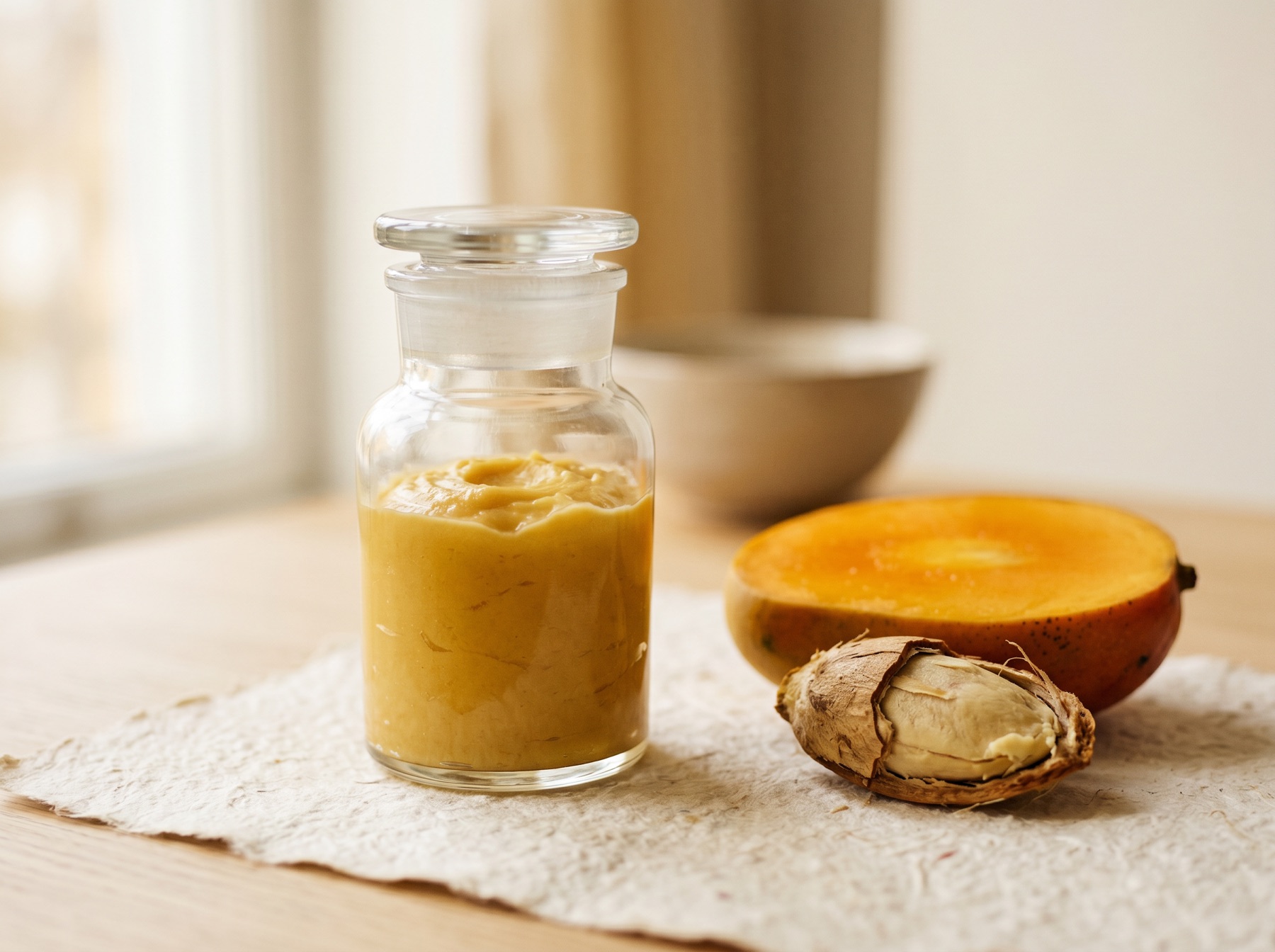
Each mango eaten produces a seed that India typically discards. The plan: buy those seeds, dry the kernels, and press them slowly at low heat. The butter that falls out is pale gold, faintly sweet, and carries the oleic lightness of a summer fruit with the structural backbone of a butter.

N° 01
The grove & the press

What this butter actually is.

The Konkan produces Alphonso and Ratnagiri mangoes in volumes that feed the world for two months a year. What nobody photographs is the seed. It sits in the core of every mango and, once the flesh is pulped, becomes a disposal problem for processors. In Ratnagiri district alone, that amounts to roughly 15,000 tonnes of kernel waste every season.

The intended process: kernels from named pulp houses, washed, shelled, and dried to below eight percent moisture before pressing. The extraction is specified cold — temperature held below 55°C — to preserve the tocopherols and keep the colour pale. A bleaching and deodorising step is planned for formulators who need a white, odour-neutral butter; the unrefined grade is the one we quietly prefer.

The butter your sustainability officer and your formulator both agree on.

The fatty acid profile is more balanced than kokum. Oleic sits between 45 and 50 percent, stearic between 40 and 45 percent. The result is a butter that behaves like a cross between shea and cocoa: soft enough to spread at 25°C, firm enough to hold structure in a lipstick at 40°C. It is our recommendation for any brand that wants to tell an upcycling story without sacrificing sensorial quality.
N° 02
Specifications

The numbers behind every kilogram.

Technical specifications

Published typical values · not lot data

Melt point
32–36 °C
SAP value
188–200 mg KOH/g
Iodine value
40–50
Oleic acid
45–50 %
Stearic acid
40–45 %
Shelf life
24 months
MOQ (target)
25 kg

Fatty acid signature

Fatty acidNotationTypical range
OleicC18:145–50%
StearicC18:040–45%
PalmiticC16:04–6%
LinoleicC18:22–4%
ArachidicC20:01–2%
N° 03
Formulation uses

Where it earns its keep.

Applications where this lipid is generally used, drawn from published formulation practice.

Face balms & night creams

Oleic richness suits dry to mature skin without occlusion.

Lip treatments

Softer than kokum, richer than shea — ideal for tinted formats.

Body butters

Primary lipid at 15–25%; pairs well with rice-bran squalane.

Hair masks

Smooths cuticle without weighing down fine hair.

Lipsticks

Structure booster at 8–12% in bullet formulations.

Baby skincare

Low irritation potential, high tolerability.

Substitution guidance

Swaps 1:1 for shea in most emulsions; lighter afterfeel. Blends with cocoa butter in confectionery-adjacent applications for a cleaner upcycled story.

Provenance of these figures

Every specification on this page is a published typical value for the botanical species, compiled from supplier technical data sheets and the peer-reviewed literature. Real ranges shift with origin, season, kernel quality and refining route: treat these as indicative, and always specify against your supplier’s own CoA.

Pre-production

First samples go to this list.

Register interest and we will write to you personally when there is validated pilot material.

Register interest
N° 04
Also from the shelf

Three more dossiers.

A waste stream, made cosmetic-grade.

From Konkan with love.